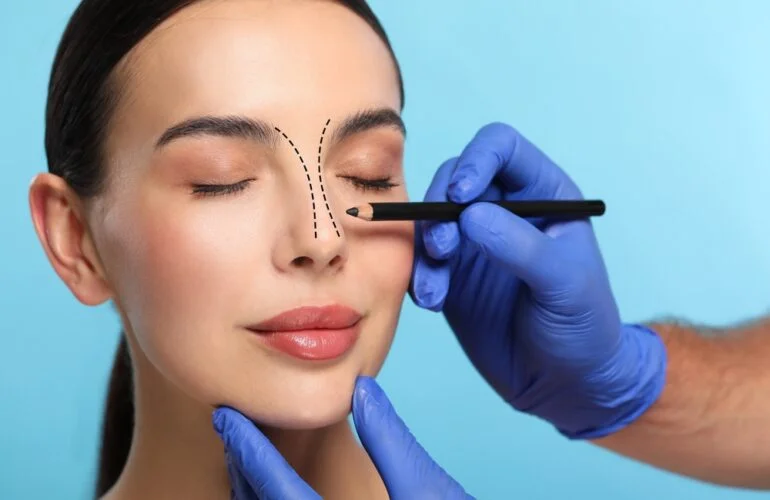
Rhinoplasty, nose aesthetic surgery, is a surgical procedure performed to provide the overall aesthetic balance of the face and sometimes to correct functional problems. Changes can be made to both the internal and external structures of the nose. The success of the surgery is possible with the combination of the right techniques and the right planning. In this article, we will examine in detail how rhinoplasty surgery is performed, the differences between open and closed techniques, and how aesthetic and functional goals are combined.
Open and Closed Rhinoplasty Techniques
There are two main techniques in rhinoplasty surgery: open rhinoplasty and closed rhinoplasty. Both techniques have advantages and disadvantages. Which technique is used depends on the patient’s needs, nasal structure, and surgeon preferences.

Open Rhinoplasty
Open rhinoplasty is one of the most preferred methods in rhinoplasty surgeries. In this technique, the surgeon makes a thin incision in the tissue called the columella (the part under the nose) between the nostrils. By entering through this incision, the entire nasal structure is exposed. Here, the surgeon can evaluate both the internal structure and external appearance of the nose in more detail and has a wider viewing angle.
Advantages:
The surgeon has a larger visual field, therefore providing more control over the shape of the nose and functional problems.
It is especially effective when aesthetic changes at the tip of the nose, correction of the humps on the nasal dorsum or shaping of the nostrils are required.
Open rhinoplasty may be preferred in more complex cases (for example, corrections made after previous rhinoplasty surgeries).
Disadvantages:
The recovery process after surgery may be slightly longer.
A small scar may remain in the columella area. However, this scar does not become very visible over time and is usually hidden in the lower part of the nose.
Closed Rhinoplasty
Closed rhinoplasty is a less invasive method in rhinoplasty surgeries. In this technique, all incisions are made on the inside of the nose. In other words, there is no incision visible from the outside. In this way, the patient recovers faster and there are no external scars.
Advantages:
Not leaving any external scars provides an aesthetic advantage for patients.
The healing process is usually faster.
The surgery is completed in a shorter time.
Disadvantages:
The surgeon’s viewing angle is more limited during the operation, which can make it difficult to perform complex corrections in some cases.
Some interventions on the tip of the nose or complex aesthetic changes can be more difficult with this technique.
In Conclusion:
Open rhinoplasty is generally preferred in more complex cases as it offers a wider area and the opportunity to perform more detailed procedures. Closed rhinoplasty, on the other hand, is preferred for simple nose shaping that requires less intervention in terms of aesthetics due to its minimally invasive structure and fast healing process.
Combining Functional and Aesthetic Goals
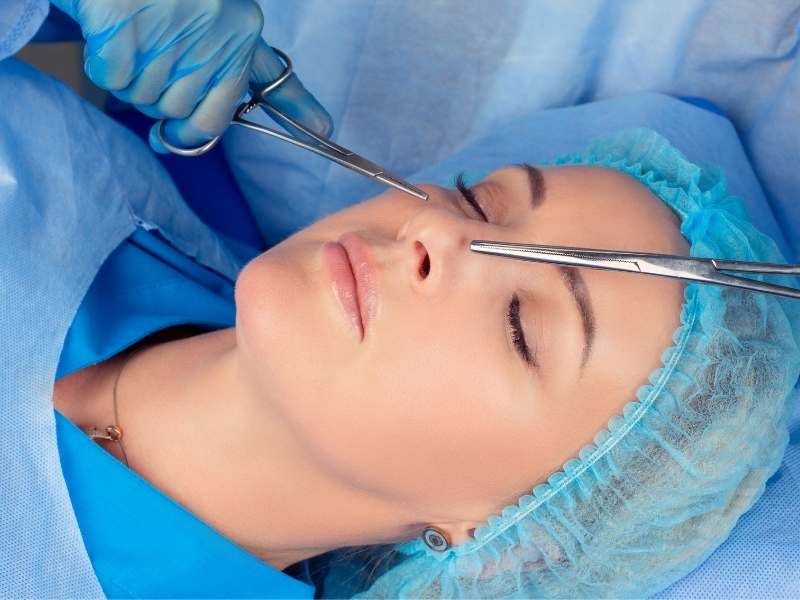
Rhinoplasty is not only an aesthetic procedure, but also performed to solve functional problems. The nose is an extremely important organ for the body’s breathing function. Aesthetic concerns and functional problems can sometimes coexist, which requires rhinoplasty surgery to combine both aspects.
Functional Goals:
Functional rhinoplasty aims to improve the patient’s breathing by correcting the structures inside the nose. Nasal congestion can usually be caused by the following problems:
Septum Deviation: Airflow can be blocked as a result of the curvature of the nasal cartilage. Septum correction can be performed.
Nasal Concha Enlargement (Concha Hypertrophy): The growth of the nasal conchas can also make breathing difficult. These conchas may need to be reduced.
Nasal Congestion: A large nasal hump or an irregular internal structure can block airflow.
Aesthetic Goals:
Aesthetic rhinoplasty includes interventions to correct the appearance of the nose. The shape of the nose should be compatible with every face, and the nose is expected to have a symmetrical, proportionate and natural appearance. These aesthetic changes may include:
Straightening the Nasal Bridge: Removing the hump on the bridge of the nose.
Nose Tip Aesthetics: The droopiness or width of the tip of the nose can be corrected.
Reducing or Enlarging the Size of the Nose: Bringing the overall size of the nose into proportion with the face.
Combining Aesthetic and Functional Goals:
One of the most important steps in rhinoplasty surgery is combining aesthetic and functional goals. Considering both goals at the same time provides both a beautiful nose shape and the opportunity to breathe comfortably. For example, during the aesthetic correction of the nose, functional interventions such as reducing the nasal turbinates or correcting a deviated septum can also be performed.
Combined Planning: The surgeon creates a personalized plan considering both the aesthetic and functional needs of the patient. This is very important for both improving the shape of the nose in a natural way and correcting breathing problems.
Long-Term Results: In addition to aesthetic changes, functional improvements should also be maintained in the long term. Because when an aesthetic change is made, this should be combined with the correct functioning of the nasal passages. Otherwise, the patient will only see a visual change, but will not experience a functional improvement.
In conclusion:
Rhinoplasty is a surgical procedure that can make significant changes to the shape and functions of the nose. Choosing between open and closed techniques depends on the surgeon’s experience and the patient’s needs. Combining aesthetic and functional goals is one of the key elements of a successful rhinoplasty surgery. Natural and healthy results can be achieved by meeting the expectations of patients in terms of both nasal shape and breathing.